What to Do When You Suspect Termite Activity
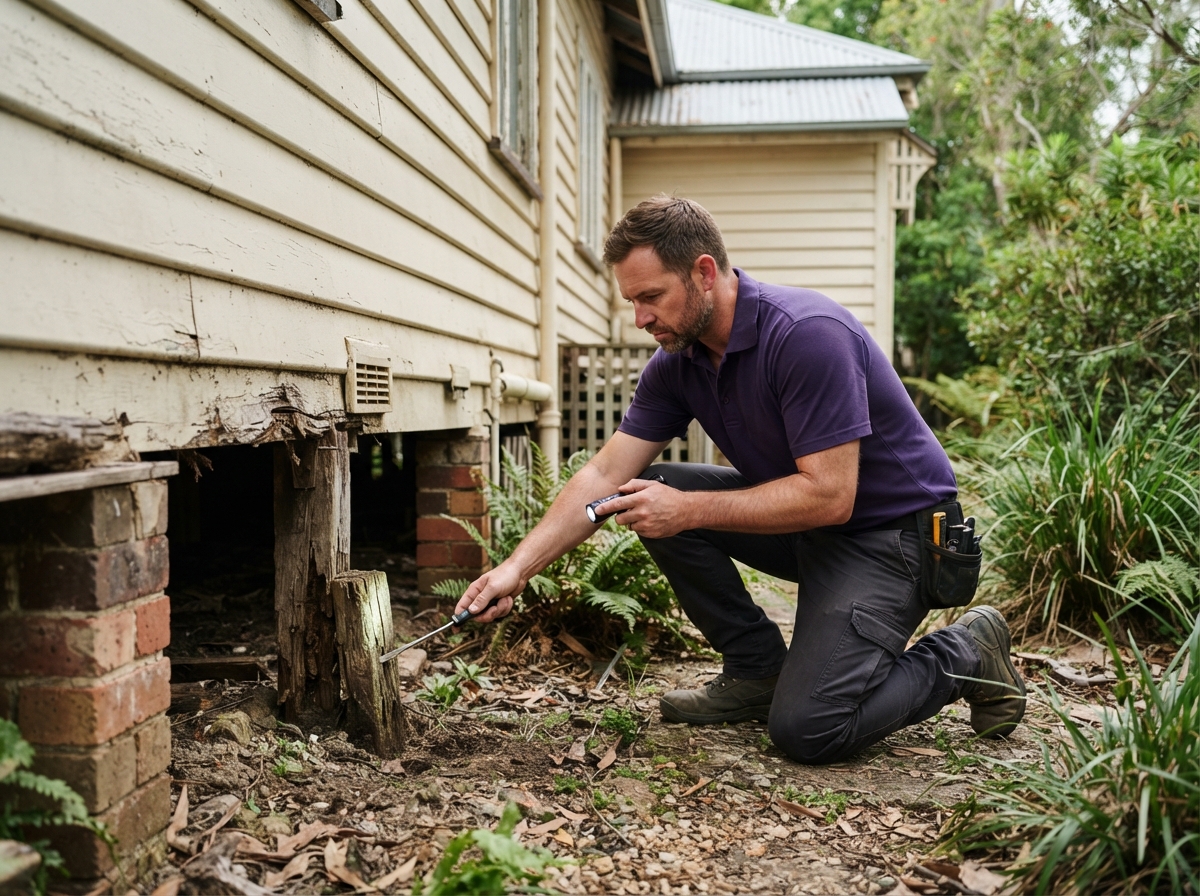
Termites can cause significant structural damage before they are detected. If you suspect termite activity, it is important to avoid disturbing the area and seek professional assessment promptly. This guide explains what to look for and what not to do.
Published 22 August 2026
Signs to look for
- Thin, mud-like tubes (shelter tubes) on foundation walls, stumps, or interior surfaces
- Hollow-sounding or soft timber when tapped gently
- Discarded wings near windowsills, doors, or light sources, particularly in warmer months
- Tight-fitting doors or warped window frames caused by moisture in termite-damaged timber
- Small holes or cracks in plaster or skirting boards with fine frass (termite droppings) nearby
What you can check safely
- Tap timber elements gently with a screwdriver handle to check for hollow or soft areas
- Visually inspect the external perimeter of the property for mud tubes on stumps or foundation walls
- Check subfloor access and hot water service overflow areas for moisture or mud tubes
- Look for discarded wings near windows and light sources inside the home
What to avoid
- Do not disturb, break, or open suspected termite galleries or mud tubes
- Do not spray the area with insecticide — this can cause the colony to scatter and spread
- Do not remove or replace damaged timber before a professional assessment
- Do not disturb the soil or mulch close to the foundation where activity is suspected
When to seek professional inspection
- You find mud tubes, hollow timber, or discarded wings
- You notice soft or damaged timber in skirting boards, door frames, or structural elements
- You are buying or selling a property and need a pre-purchase inspection
- Your neighbours have confirmed termite activity nearby
Melbourne context
Subterranean termites are present across Melbourne, including established suburbs and newer developments. Properties with timber stumps, subfloor ventilation issues, or soil-to-timber contact are more vulnerable. Termite activity can be seasonal, with swarms more common in warm, humid weather. Termite inspection and treatment require appropriate training, licensing, and insurance — always confirm the provider's qualifications.
Related services
Frequently Asked Questions
Need help with a pest problem?
Tell us what you saw, heard, or found. We will help confirm the pest and the right inspection or treatment for your property.
Request a Quote
Tell us what you saw, heard, or found. We will help confirm the pest and the right inspection or treatment for your property.
By submitting the quote form, you agree that Upkil Pest Control may contact you about this enquiry. See our Privacy Policy.